BehindTheBadge —
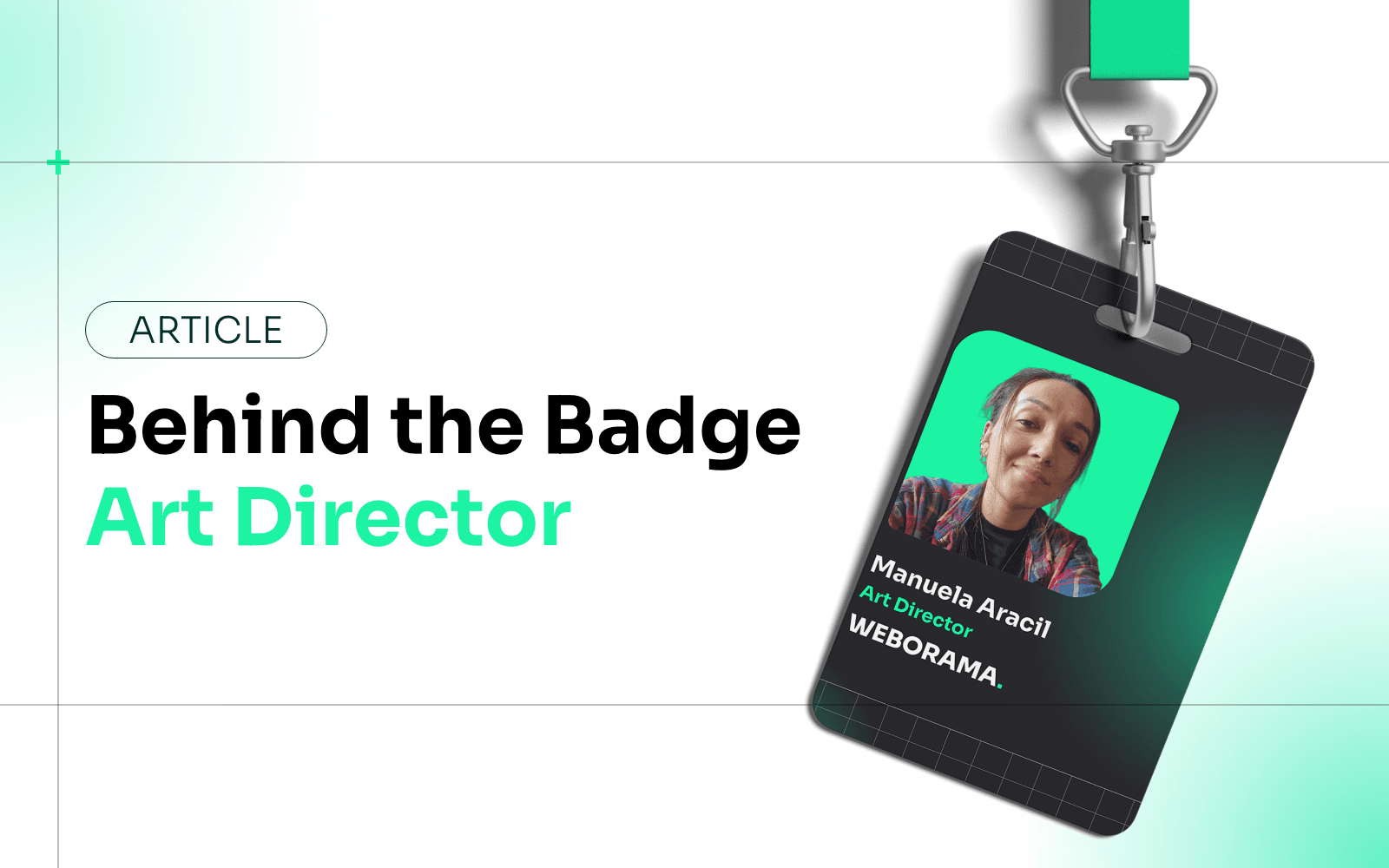
Meet Manuela Aracil, Art Director at Weborama, as she takes us behind the badge to share what an Art Director actually does at a data company, how she makes something as abstract as intent visible, why data and creativity work best when they’re in the same room from the start, and how AI is reshaping creative work without diluting the brand.
What does an Art Director actually do at a data company?
I translate, I support, I give things shape. My role is to turn data into something people can see, understand and remember. In practice, that ranges from visual identity to designing ad formats, including materials that explain our products. A kind of interpreter between what the tech can do and what people actually want to look at.
How do you make something as abstract as intent visible?
You give it a concrete form, for example by showing its movement. Intent is a shift: someone going from “I’m looking” to “I want it.” Visually, it becomes a signal lighting up, a trajectory, or a point on the move. A picture is worth a thousand words, and that’s even more true when the subject is invisible.
Data and creativity: do they help each other or fight each other?
To me, they fight when you make them work one after the other. They help each other when they’re in the same room from the start. Data tells me who I’m talking to and when. Creativity decides how to talk to them so they actually want to listen. A great target without great creative is a well-addressed message nobody opens, and vice versa.
What has AI changed in your creative work over the past 12 months?
AI has profoundly changed how people perceive the creative world. Anyone can now generate an image or a mockup in seconds, which creates as much enthusiasm as misunderstanding.
It has its upsides: the time saved on certain tasks is real, like testing ideas or finding the right wording when you’re stuck. But only if it’s used well. Without direction, it produces fast, but generic, with no identity and no point of view.
For me, what has really changed is twofold: time saved on some tasks, but also a responsibility to raise awareness. Explaining what AI does well, where its limits are, and how to use it without diluting the brand. Today, part of my job is making sure speed serves quality, not the other way around.
If you had to bring back a 90s expression to describe your personality, which one would it be?
“Faut pas pousser mémé dans les orties.”