BehindTheBadge —
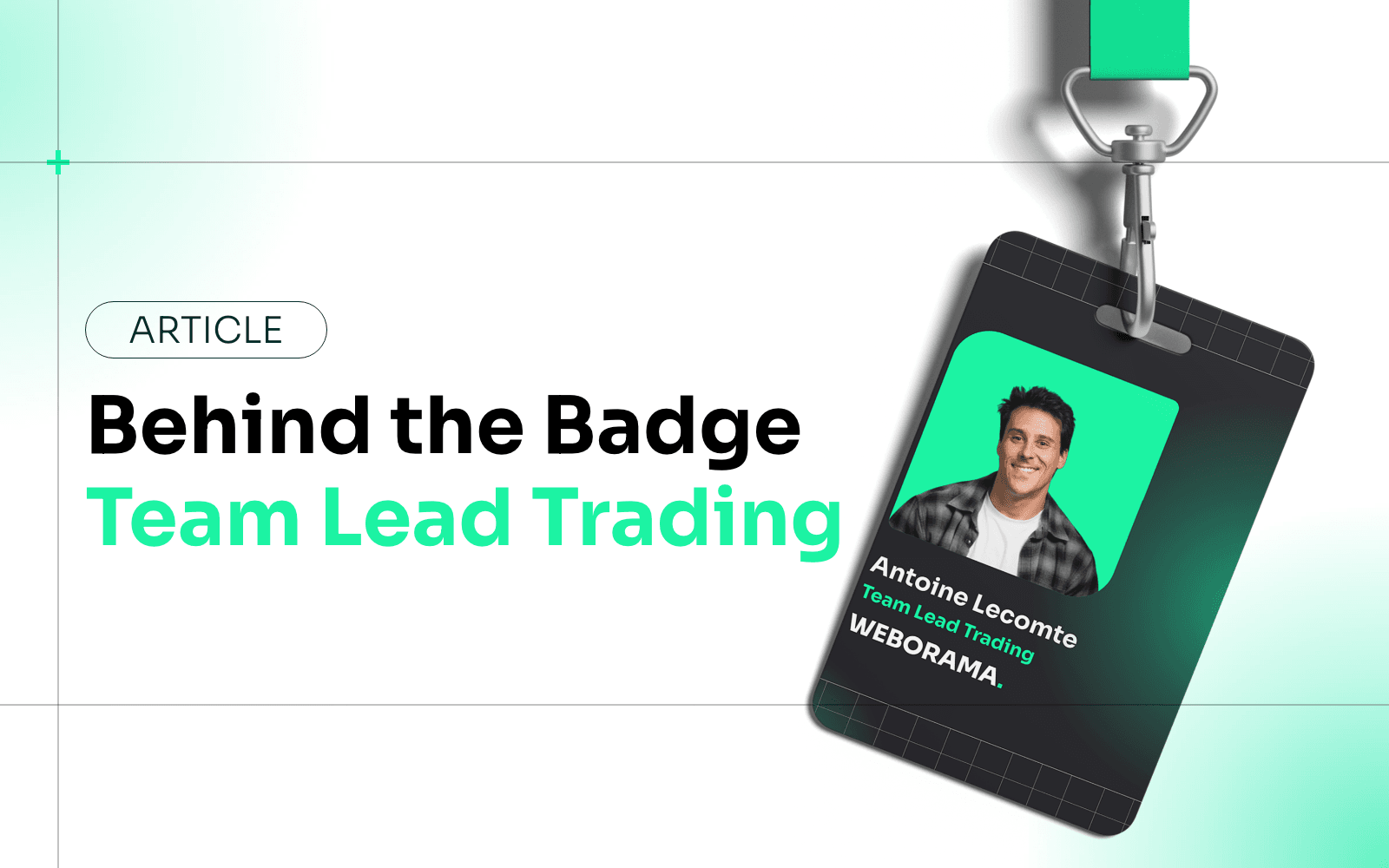
Meet Antoine Lecomte, Team Lead Trading at Weborama, as he takes us behind the badge to share what trading really looks like day to day, how intent scores are changing the way he buys media, what a job well done feels like, why the job is far more than “set it up and let it run,” and how AI helps him go faster and sometimes further.
What do you actually do all day?
My job is to manage ad campaigns, which means juggling two goals at once: getting the best possible performance on the client’s KPIs, and delivering the planned volume.
“Trading” means setting up data-driven strategies with an ongoing test-and-learn approach: I push what works, cut what doesn’t, and test something else to go after the best performance.
You also need to stay flexible and agile. Tools are constantly evolving, so you have to know how to use them, understand them, and sometimes even debug them.
Alongside that, I support clients day to day. The idea isn’t just to deliver a campaign, but to build a lasting relationship.
And as a team lead, I help more junior team members build their skills.
How does the intent score change your media buying decisions?
It adds one more signal to the test-and-learn approach. We no longer just ask who we’re talking to, but also where that person is in their thinking.
Intent lets us reassess the value of CPMs: when it’s strong, we’re ready to bid higher to go after the conversion. When it’s weaker, we focus on consideration instead, with the right formats and KPIs.
We invest the budget more intelligently to work across the different stages of the funnel.
What’s the moment you know you’ve done a good job?
It’s when a campaign lands with the budget fully delivered and KPIs above target, and I can explain which tests and trade-offs made the difference. It’s also when a client comes back for the next campaign (or turns it into an always-on campaign) because they trust the way we run things.
On the team side, it’s when juniors become more autonomous: spotting a delivery or performance issue on their own, testing relevant strategies, managing the client relationship, and so on.
What people imagine about your job vs. the reality?
People often picture an execution job: do the setup, change a creative from time to time, and let it run. In reality, that’s exactly how you hit a wall: under-delivery, results below expectations, a disappointed client. The core of the job is understanding the goals and the tools in depth, then building the path to reach them. You need to know why a campaign isn’t spending, why a KPI is dropping, and which lever to pull to get back on track.
How has AI changed the way you trade?
It has changed the auction itself. Custom bidding algorithms like Scibids’ retrain scoring models several times a day, where we used to adjust rules by hand. But it has also changed everything around the buying. We automate what used to take up my time without adding value: reporting, naming, reconciliation between tools, pacing checks, first drafts of analysis, or guidance on using new tools. So we spend more time on what really matters: designing tests, interpreting results and advising the client. AI doesn’t trade for me, it helps me go faster and sometimes further.
If you could bring a 90s expression back into fashion to describe your personality, which one would it be?
“C’est dar!”
It works for new tech, and it’s what I love to hear when a test we’ve pushed finally pays off.